Category: Ideas for everyday life

  • When It Feels Easier to Say Nothing

    When It Feels Easier to Say Nothing

    Sometimes I want to talk about something without needing anything from the person listening. I’m not necessarily looking for an answer, and I don’t always need someone to tell me what I should do next or explain how they would handle it. I might not even know what I think about it yet. I just want to say it out loud.

    I’ve realised that whether I do that or not depends a lot on whether I feel safe enough to talk. For me, feeling safe doesn’t mean someone has to agree with everything I say. Two people can hear the same story and see it completely differently, and I’m okay with that. What matters more is being able to finish what I’m saying without being talked over, without the conversation becoming louder, and without feeling judged for whatever it is I’m trying to explain.

    When I have that kind of space, I can talk quite openly. When I don’t, I tend to say less.

    I’m not always looking for a solution

    I understand why people offer solutions. When someone we care about tells us about a problem, trying to help is a pretty natural response. But not everything I talk about is a problem I’m handing over to someone else to fix.

    Sometimes I already know what I’m going to do, and sometimes there isn’t anything to do. I might be frustrated about something that happened, trying to make sense of how I feel about it, or simply wanting to tell someone about my day. There’s a big difference between asking, “What do you think I should do?” and saying, “You won’t believe what happened today.” Sometimes I just want someone to hear the story.

    Silence doesn’t always mean there’s nothing to say

    Being talked over is probably one of the quickest ways for me to stop talking. Once I’m trying to finish a sentence while someone else is talking, I’m no longer thinking about what I originally wanted to say. I’m thinking about whether I’m actually going to get the chance to say it.

    A raised voice has much the same effect on me. I don’t communicate better because a conversation gets louder; I become quieter. I would rather stop and come back to something later than keep trying to make myself heard in a conversation that no longer feels like a conversation.

    Judgement changes things too. Sometimes what I want to talk about isn’t fully formed yet. I might be annoyed, confused or looking at something differently today than I will tomorrow. Talking can be part of working that out.

    If I feel as though I’m going to be judged for what I say, I start editing it before I’ve even said it. I think about how it might sound, whether it will be misunderstood or whether I’m going to have to defend it afterwards. Someone can disagree with me and still give me room to talk. Those two things aren’t opposites.

    I think I understand silence better now than I used to. When someone becomes quiet, it’s easy to assume they don’t want to talk. Sometimes that will be true, but I also know from my own experience that staying quiet can simply feel easier. If speaking means being interrupted, judged, given solutions you didn’t ask for or ending up in a louder conversation than you wanted, you start deciding which things are worth bringing up.

    From the outside that might look like having nothing to say. It doesn’t necessarily feel that way from the inside.

    Being on the other side of it

    Perhaps because I know what it feels like to be on the other side, I notice the value of this kind of space much more now. When someone comes to me wanting to talk, I try to remember what it feels like to be on the other side: to have something you want to say and realise you’re being talked over, to feel the conversation getting louder, to hear solutions when you weren’t looking for one, or to start wondering whether what you’re saying is being judged.

    Knowing how that feels makes me want to offer something different. It doesn’t mean I always get it right. I’m sure there are times when I jump in too quickly or assume someone wants my opinion when they really just want me to listen.

    But being on the other side has made me much more aware of the kind of space I want to give someone when they come to me. A chance to talk without being interrupted, judged or immediately given a solution. Somewhere they can say what they’re thinking and know that, for a little while, all they really need to do is talk.
  • Why Is It So Hard to Decide What to Do With Your Free Time?

    Why Is It So Hard to Decide What to Do With Your Free Time?

    There are days when I spend hours looking forward to having nothing to do. No appointments, no errands that can’t wait, nobody expecting me somewhere. Just a few hours that are completely mine. You would think deciding what to do with them would be the easy part.

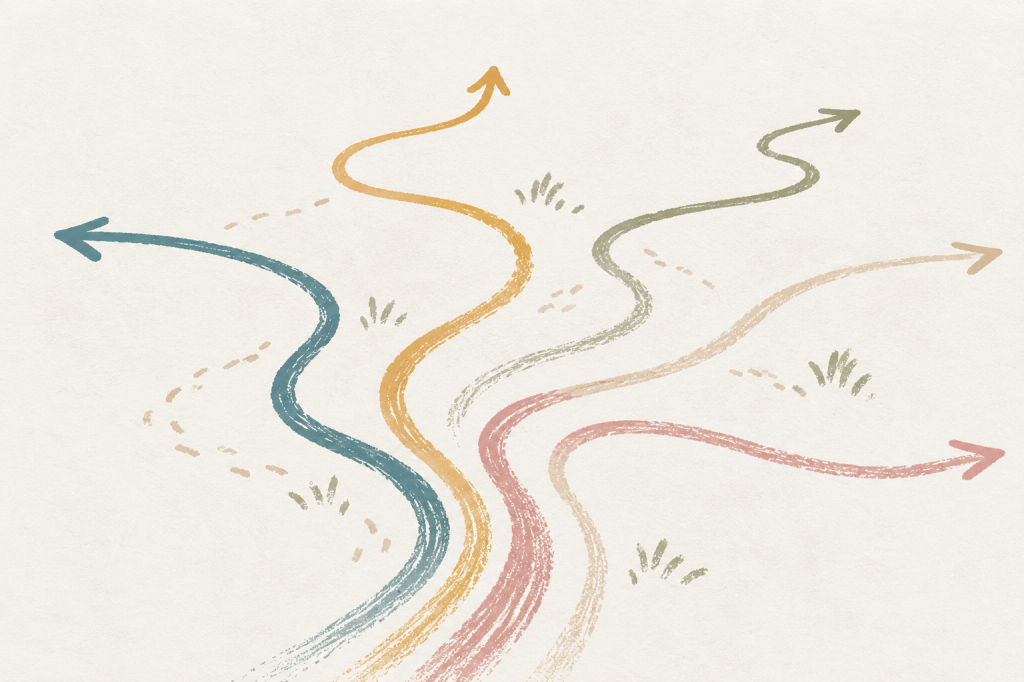
    Instead, I can find myself wandering around the house thinking about all the possibilities. I could go somewhere or stay home. I could finally get around to something I’ve been putting off, read, watch something, sit outside, start something new, or enjoy the rare opportunity to do absolutely nothing. Then somehow I end up doing none of those things. The phone comes out, I look at one thing and then another, and before I know it, quite a bit of that lovely free time has disappeared.

    It seems ridiculous when the whole point was that I finally had a choice.

    Perhaps free time comes with more decisions than we realise

    Most of everyday life has some kind of structure. Even on days when there is too much to do, there is usually a next thing. Get ready, go to work, come home, make dinner, put something away, deal with whatever needs dealing with. We might not particularly want to do those things, but we don’t have to spend much time wondering what comes next.

    Free time is different because suddenly there is no obvious next thing. When nobody else has decided how that time will be spent, the decision belongs entirely to us. That sounds wonderful, and mostly it is, but it also leaves us with a surprisingly big question: What do I actually feel like doing?

    Some days the answer comes immediately. Other days I can think of plenty of things I could do and still have absolutely no idea which one I want to choose.

    Having plenty of options doesn’t necessarily make choosing easier

    I used to think the answer was having more ideas. Make a list of things I enjoy. Remember all those things I say I never have time for. Keep a few possibilities ready for the next quiet afternoon.

    The problem is that a long list can become another list to work through. Read, walk, watch a movie, go for a drive, start a project, finish a project, cook something, call someone, go somewhere, stay home. They can all be perfectly good ideas and still not answer the question.

    Perhaps that’s because the question isn’t really What could I do? I already know what I could do. What I’m actually trying to work out is What would feel good right now?

    And that depends on the day. Sometimes getting out of the house sounds wonderful. Sometimes the thought of getting ready and going anywhere is enough to make staying home win immediately. Sometimes I want the satisfaction of getting something done. Other times the last thing I need is another thing to accomplish. The same person can have the same free afternoon and need a completely different answer.

    A smaller question can be easier

    Instead of trying to decide exactly what I want to do, I’ve started with something simpler: What kind of thing do I feel like?

    Maybe I want something small and easy. Maybe I’ve been sitting around for too long and want to move. Perhaps I have the time and interest to settle into something for a while, or maybe I want something quiet that requires almost nothing from me. Starting there feels much easier than searching through every possible way I could spend the next few hours.

    It also takes away some of the pressure to make the “right” choice. If I put something on and lose interest after twenty minutes, I can turn it off. If I go outside and decide I’d rather be home, I can come back. If I start something and realise I don’t actually feel like doing it, I can stop and choose something else. Free time doesn’t need to become another commitment.

    Sometimes doing nothing really is the answer

    There can be a strange pressure around free time, especially when there never seems to be enough of it. When a few hours finally appear, it can feel as though they should be used well. Even relaxing can somehow turn into something we’re supposed to do properly.

    But there are times when I don’t need an activity. I don’t need to make progress on anything, have an experience, practise a hobby or turn an ordinary afternoon into something memorable. Sitting somewhere and doing very little might be exactly what I wanted the time for.

    That doesn’t make the time wasted.

    How my Dopamine Menu started

    Thinking about all of this eventually led me to the idea of a Dopamine Menu. I wasn’t looking for another schedule or a huge collection of things I could be doing. I wanted a smaller selection to look at when I had time but either too many possibilities in my head or none at all.

    I liked the idea of a menu because a menu doesn’t tell you what you have to choose. It simply puts some choices in front of you. The one I made for From Where I Sit Studio groups ideas by what might suit the moment: something small and easy, something to get you moving, something to settle into, or something quiet and low effort. There’s also room to add your own because what sounds good to one person might do absolutely nothing for someone else.

    Making it also changed the way I think about those little pockets of free time. I don’t always need to work out the best way to spend them. Sometimes it’s enough to notice how I feel right now, choose something that seems to fit, and see where it takes me.

  • Too many things, not enough time

    Too many things, not enough time

    Some days there are simply more things to do than there is time to do them. When that happens, my first instinct is usually to work out how I can fit everything in. What should I do first? What can I squeeze in before work? What can I get done while dinner is cooking? Somehow the question is always about how I’m going to do everything, rather than whether everything actually needs to be done.

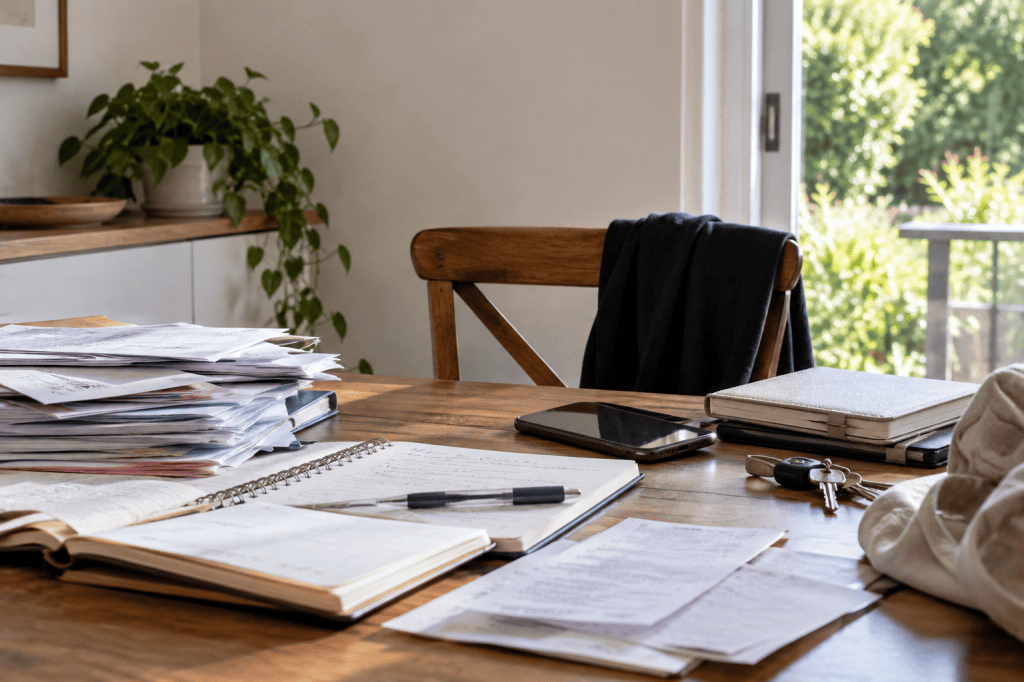
    Once something makes it onto the mental list, it can start to feel important. The washing needs folding, someone needs a reply, there’s something to pick up from the shops and an appointment I’ve been meaning to make. Then I notice something around the house that needs doing, remember something else and add that too. None of it is particularly difficult on its own. There’s just a lot of it.

    Being organised certainly helps, but it doesn’t create more hours in the day. A beautifully written list with everything arranged in the right order is still a list that might contain more than I realistically have time for. I’m beginning to realise that sometimes there isn’t a cleverer way to fit everything in. Something simply has to wait.

    That sounds obvious when I write it down, yet I don’t think I’ve always treated it that way. Leaving something until tomorrow can feel like I haven’t finished what I was supposed to do today, even when nobody actually decided it had to be done today except me.

    So I’ve started looking at those busy days a little differently. Some things genuinely need my attention. A bill with a due date is different from a cupboard I’d like to tidy. An important phone call is different from a load of washing that can wait another day. They may all be on the same list, but that doesn’t mean they all carry the same weight.

    There are also things I would like to get done, things that can wait and, if I’m being realistic, probably a few things that don’t need doing at all. It’s surprisingly easy to turn something I could do into something I should do.

    Another question worth asking is whether I’m actually the person who needs to do it. When you’re used to remembering things, organising things and making sure things happen, it’s easy to keep doing them without really thinking about it. Something can end up on my list simply because it always has.

    None of this means responsibilities disappear or that putting things off indefinitely is the answer. It just means accepting that time and energy have limits. On a day when the list is longer than the hours available, deciding what not to do can be just as useful as deciding what to do first.

    Everyday life will keep adding things anyway. There will always be another job around the house, another message, another appointment and something else I suddenly remember. Perhaps finishing everything was never a realistic goal.

    Sometimes there are too many things and not enough time.

    And it’s okay not to do them all.

    If your head is carrying too much

    Sometimes it helps just to get everything out of your head and onto paper. The Invisible Load Reset is a printable brain dump workbook designed to help you capture what you’re carrying, sort through it and decide what actually needs your attention.

    View The Invisible Load Reset

  • Sometimes nothing much is plenty

    Sometimes nothing much is plenty

    Monday morning conversations often start the same way.

    “How was your weekend?”

    “Good.”

    “What did you get up to?”

    “Nothing much.”

    IIt’s such an ordinary answer. But after saying it, I realised I actually meant it in a good way. I hadn’t done anything special, and doing nothing might have been the best thing I could have done.

    As far as weekends go, this one wasn’t very eventful. There were no special plans or anything particularly exciting. There really wasn’t much to talk about. But I’d had a really good couple of days.

    “Nothing” can feel like it needs an explanation. If you went away, tried a new restaurant or spent the day out, there’s something to talk about. Staying home and not doing much doesn’t sound nearly as interesting. But does our free time have to be interesting?

    Waking up with nowhere I had to be was probably my favourite part. No rushing to get ready or checking the time because we had to leave. The day didn’t need to go anywhere. I could just see what happened.

    Even when we have free time, it’s very easy to fill it. There are always jobs around the house, places we could go or things we’ve been meaning to get around to. Before you know it, the empty day isn’t empty anymore.

    And doing nothing isn’t really nothing anyway. I still got up, made something to eat, wandered around the house, talked to people, looked at my phone and did a few little things here and there. It was just an ordinary day. The difference was that I wasn’t doing one thing while already thinking about the next. That felt good.

    I’ve always looked at free time as an opportunity to do something. A quiet afternoon could be used to get a job done, and a weekend without plans could easily become a chance to make some. Even ten quiet minutes can somehow end with a phone in my hand.

    Now I’m wondering whether we need to fill all of it. Having a few hours with nothing expected of me didn’t feel like wasted time. There was nothing to achieve and no need to make a point of relaxing. I was just enjoying the day for what it was.

    By the time I went back to work, I actually felt like I’d had a weekend. Sunday hadn’t been spent trying to squeeze more into the hours I had left before Monday came around. There was nothing I wished I had managed to fit in.

    Of course, I wouldn’t want every Saturday and Sunday to look like that. I like having plans, going places and having things to look forward to. But I think I’ve been underestimating the quieter ones when nothing much happens.

    So the next time someone asks what I did over the weekend and my answer is “nothing much,” I don’t think I’ll feel the need to make it sound more interesting.

    Sometimes nothing much is plenty.

  • Welcome to From Where I Sit Studio

    Welcome to From Where I Sit Studio

    Welcome. From Where I Sit Studio started with a fairly simple thought. Everyday life is full of little things we figure out as we go — problems that need solving, responsibilities that could be made easier, and thoughts that make us wonder whether other people think about these things too.

    There wasn’t one particular subject I wanted this space to be about. The common thread was everyday life itself, and all the practical, complicated, interesting and sometimes very ordinary things that come with it.

    What you’ll find here will probably vary. Some things will be practical — guides, printables and resources created to make something a little easier. Some will simply be ideas and observations about the situations we all find ourselves navigating.

    There will also be things worth sharing. Products, tools and useful finds that have genuinely helped, solved a problem or made everyday life a little better.

    I’m not quite sure yet what this space will become, and I think that’s part of the point. It has room to grow, change and make space for the things that feel useful or worth talking about.

    So, welcome to From Where I Sit Studio. Have a look around. Hopefully, somewhere along the way, you’ll find something useful, something familiar, or simply something worth thinking about.